
The Paris Agreement is designed to help all nations work with others to build stronger, more innovative local economies with better prospects for enduring shared prosperity. In other words, if you want to have a good life and enjoy safety, freedom, and opportunity, the Paris Agreement is your friend.
One of the great misunderstandings at the heart of climate politics in many parts of the world is the view that high-level international policy discussions will result in reduced economic prosperity at home. Many rightly worry that they have too little personal say in big decisions that affect them.
On the first point, opportunity: Leaving climate change unchecked will cause massive harm and cost everywhere. That is not a better, safer world. The Paris Agreement provides a solid foundation for the right kind of policy to get the right kind of outcomes. Local and national governments are still needed to set the right policies for local conditions.
On the second point, representation: Get involved. This can be tricky. The people making decisions may not think like you or vote like you, but they represent you; they are there to work through difficulties so that you and your community have better outcomes. They will not know how their decisions affect your dreams and aspirations, unless you communicate with them.
Communication is crucial: Both advocates for climate solutions and those who are wary of climate action need to not just shout, but connect—with each other and with decision-makers. Communicating effectively means not just telling people what you believe or desire or fear but talking together in a way where people hear each other.
International climate policy is a vast, complicated landscape of conversation. That word—conversation—becomes incredibly important when the stakes are as high as they are with climate disruption and its ripple effects. Without meaning to be cute about it, to converse is to engage the converse—perspectives in which key ingredients take distinct or even opposite positions to those we assume to be true.
In other words, to make climate policy, diverse perspectives need to engage, differ, pressure, and evolve one another, so that something like common ground can emerge. Common ground is not surrender, as hardline politics tempts us to believe; common ground is success—the beginning of the real practical conversation about how to solve a big problem together.
The power of international policy is that the conversation involves all perspectives—or can involve all perspectives. It can involve finance, energy, trade, banking, and methods of management of resources that determine whether we destroy or maintain vital watersheds, ecosystems, and the supply of freshwater and food that we need to survive. That conversation about proliferating parameters for risk and opportunity eventually touches all lives directly or indirectly.
That means: You are a stakeholder. Your business, your politics, your faith, your family, the way your municipality or community chooses, formally or informally, to address the everyday perils that climate disruption entails—all of these personal values and notes of local context have relevance, if you can bring them to the discussion in a way that makes everyone’s understanding and preparation smarter.
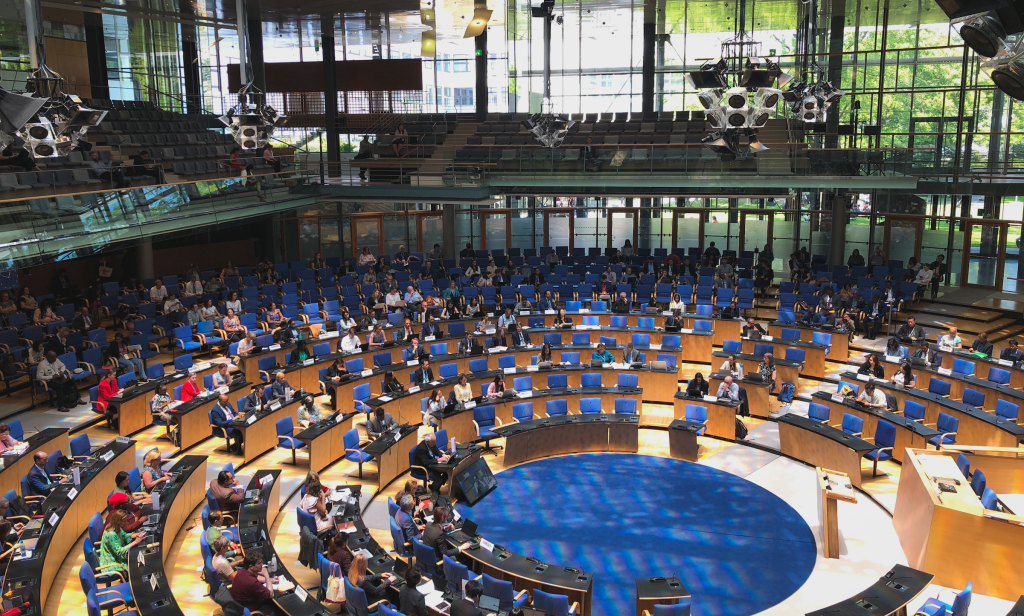
The third point is one that is less about comprehension or political alignment and more about human nature. Global climate talks are frustrating; the multiple converse position engagement adds to the already bewilderingly complex landscape, so that what sounds simple—a conference in which we discuss climate change and how to respond—feels like the Galactic Senate from Star Wars.
This is one reason you will hear about last-minute dustups that have apocalyptic overtones. Even those in the room can often feel that the whole picture has been impossible to resolve; that makes known news startling in new context and also allows surprises to emerge at the last minute. This is one of the many ways in which global talks are frustrating, so it is vital to read all news critically and cut through the friction that reverberates in snap reporting.
What most likely matters to the uninitiated—whether you are highly concerned about addressing climate change or skeptical about the need to reduce climate risk—is that none of these conferences will ever “solve climate change”. That will only happen when nearly all human activities have stopped heating the atmosphere and ocean; that depends on much more local decisions, and that moment of victory is a long way off.
The question is: What tools are being developed that can make it easier for me / my enterprise / my city / the people I know and cherish to respond to climate disruption, reduce risk, and set the conditions for a more resilient, safe, and prosperous future?
The start of the answer to that question is a note of context for reading climate news, going forward: Tools are being developed, and some will be extremely useful to you. Others might suit other people, and you don’t need to worry much about them. Some will create new kinds of competition, even in local economies. Find the tools that help you, try to make the processes that develop them better, if you want to have a say, and think about how to put them to use.
International climate policy is all about empowering you by making better options, in greater number, available for getting to the healthiest, most value-building decisions.
 Geodesiq Strategies