
In a dangerous attempt to suppress evidence and move America backward on climate crisis response, Donald Trump is attempting to end consideration of the “social cost of carbon”. The move is included in the January 20 executive order which purported to declare an “energy emergency”.
To understand why this move is dangerous, it helps to look at what the social cost of carbon is, and why it was necessary.
In 1992, nearly 200 nations agreed an international treaty to “prevent dangerous anthropogenic interference with the climate system”. The US administration of President George Bush (41) ratified the treaty with Senate approval, and called for a global age of innovation to eliminate pollution that destabilizes the climate system.
The assumption at the time was that any costs would be future costs and should be dealt with by future generations. For this to be viable, in terms of basic fiscal math, it was necessary to assume that future generations would have advanced technological capabilities not available in 1992, and therefore major climate action would not be so much of a cost to future generations as it would be to those already dependent on fossil fuels.
Many things were wrong with that assumption, not least the fact that it failed to consider that climate-related costs are pervasive, multifaceted, and compounding.

The social cost of carbon was intended to set one clear standard for the estimated hidden cost of burning one ton of carbon dioxide, in terms of global heating and resulting climate-related harm and cost. The cost per ton of CO2 can also be applied to determine the equivalent cost for other pollutants, according to their relative heat-trapping impact.
Four main points are relevant to the new administration’s attempt to suppress this information:
- Not counting the cost does not eliminate the cost.
- Scrapping the social cost of carbon metric will likely lead to increased real-world harm to people and businesses.
- Businesses and investors will face liability in court, without the benefit of the wider marketplace for goods and services having clear and steady guidance on how to operationally reduce such liability. This will further disrupt economic opportunity and will have unintended consequences, worsening impacts on vulnerable people, communities, and sectors.
- Not acting to avoid the social cost of carbon will lead to government spending in more wasteful ways, as disasters become more costly and innovation comes too late. This added cost could easily run into the trillions of dollars, over just the next decade.
What Trump and his extremist enablers seem to be ignoring—or hope no one will notice—is that whether or not they carve out a moment in which they can get away with a lot of bad and costly things, the First Amendment makes it unlawful to limit Americans’ right to pursue redress.
One way or another, the costs will come due.
The move to eliminate the social cost of carbon (SCC) is also ill-conceived from a deregulatory perspective. The number was always far too low, given what we know from scientific observation, climate models, and projected costs. A low SCC number was a benefit to polluting businesses, which were effectively given more time and less responsibility in solving the economy-wide problem of climate pollution.
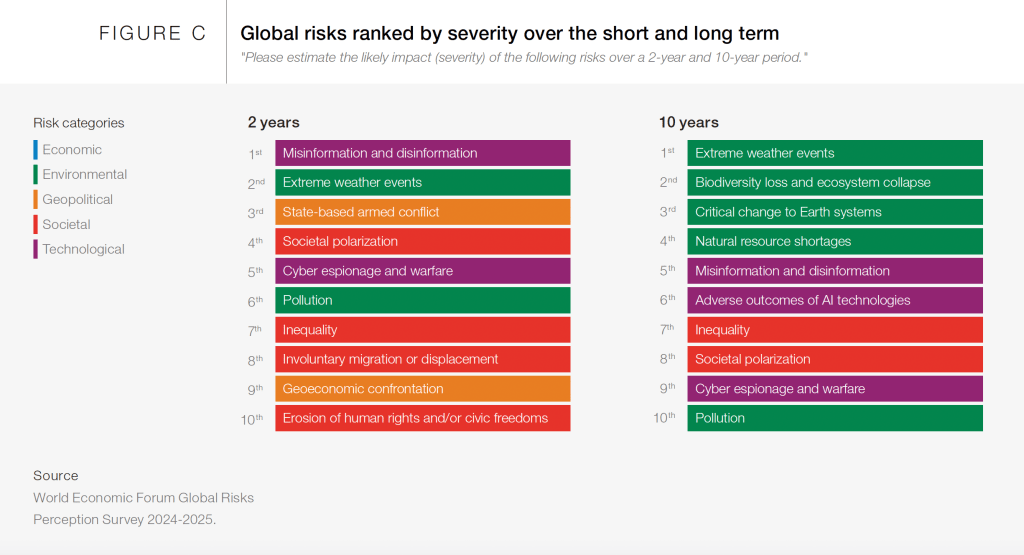
If disaster costs threaten fiscal stability or food prices threaten to blow up the economy, no government will side with polluters. In the absence of that designated number, courts will be freer to consider all relevant information, and to evaluate the real cost of direct and indirect harm. Courts have already recognized that current and future generations have a right not to be harmed by climate pollution.
It is also worth noting that, in order to comply with federal law—and maybe as a nod to the First and Fourteenth Amendments’ redress and equal protection guarantees—the January 20 executive order includes this potentially very consequential clause, in Section 2(h):
It is the policy of the United States… to guarantee that all executive departments and agencies… provide opportunity for public comment and rigorous, peer-reviewed scientific analysis…
The attempt to end consideration of the social cost of carbon is an attempt to suppress evidence. Phrasing like Secion 2(h) is added to make it appear otherwise. The effect, however, is that all U.S. government agencies are effectively ordered to continue consideration of the very scientific evidence Pres. Trump seeks to suppress, with less organized guidance.
The administration seems to believe creating a delay in consideration of climate costs gives leeway for an action that would otherwise be unlawful. It is also clear the budget-cutting ideologues behind the Trump administration’s actions recognize that there are material costs that will work their way into budget calculations, one way or another.
New analysis of scientific data suggests global heating is worse than previously thought, and is accelerating. The Atlantic Meridional Overturning Circulation (AMOC), a key climate-regulating ocean current, is now considered likely to slow or break down in the next 20 years.
This means food security, fiscal stability, and economic prosperity, will face unprecedented, destabilizing pressures—in all nations, and much sooner than previously expected.
We cannot afford to pretend this is just a policy preference or a political choice. The currently ongoing effort to dismantle American climate crisis response—including the effort to shut down climate science observation and reporting—will cost the United States trillions and could be the most costly mistake (or abuse) of our age.
The private sector needs to develop advanced, high-precision climate risk, cost, and resilience metrics, and Congress, the Courts, and the States, need to act to restore sanity to public policy, before it is too late. Local economies can benefit, but innovations and investments need to start moving.
CRITICAL CONTEXT FROM THE NAVIGATOR
- There is no energy emergency
- US Constitution protects rights to information and redress
- The climate is a physical reality; the US needs climate science
- The Age of (Proliferating) Risk
- Climate, food scarcity, AI, and bias, threaten human rights and wellbeing
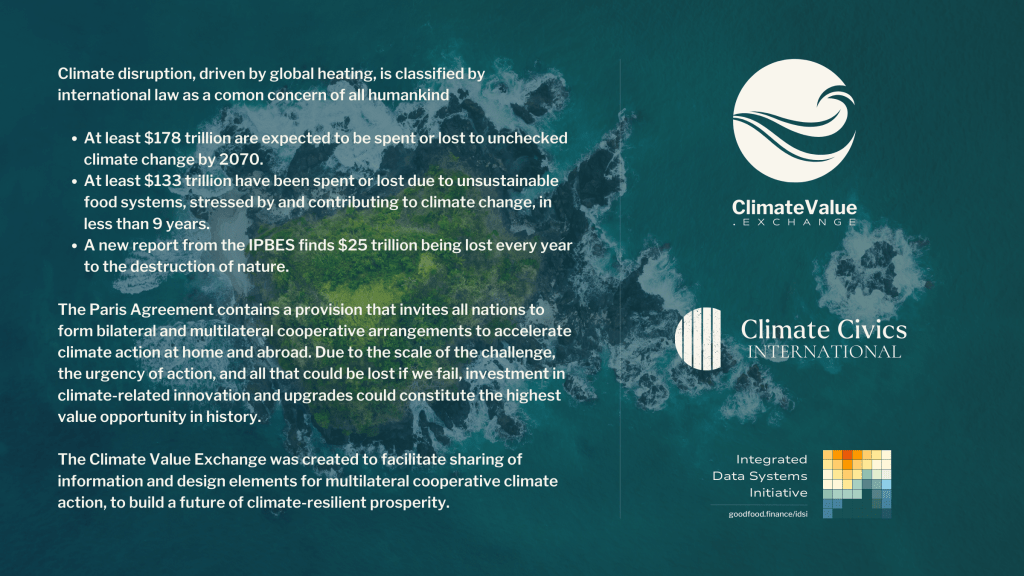
Learn more about climate-related costs and value-creation through The Climate Value Exchange.
 Geodesiq Strategies