
It is one of the most compelling headlines one could read: Asteroid found to contain sugar and stardust. The asteroid Bennu was visited by the OSIRIS-REx (Origins, Spectral Interpretation, Resource Identification, and Security-Regolith Explorer) spacecraft, which landed to collect sample material, which it then returned to Earth.
Scientists studying material collected from Bennu have for the first time found sugars that are essential to proteins and genetic material on a world other than Earth. NASA describes the materials found on Bennu as “sugars essential for biology, a gum-like substance not seen before in astromaterials, and an unexpectedly high abundance of dust produced by supernova explosions”.
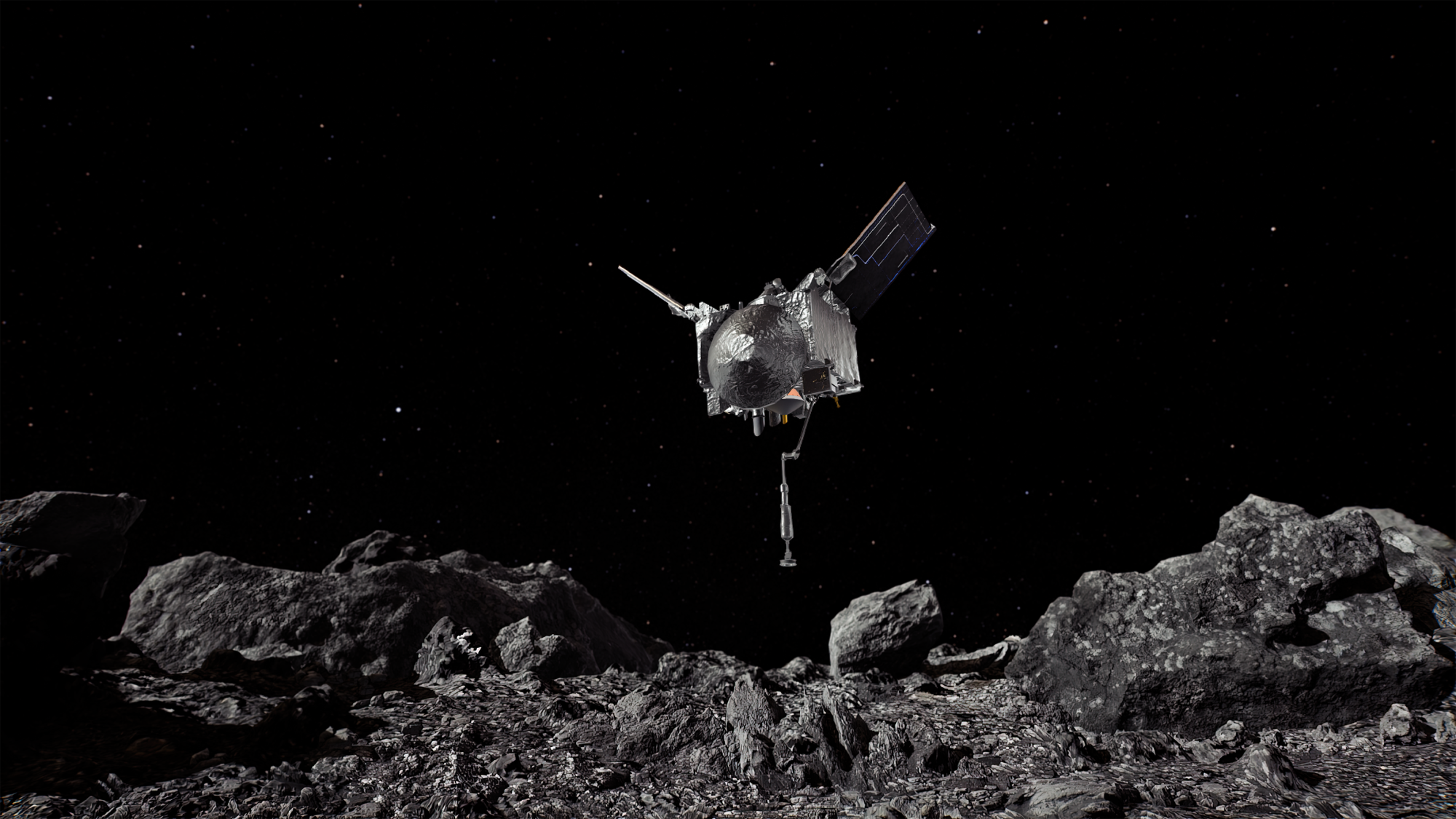
Bennu is a unique near-Earth object that is, on average about 105 million miles from the Sun, only a little farther than Earth, which averages 93 million miles from the Sun. Bennu is currently about 160 million miles away from Earth (farther than the average distance between Earth and Mars, which is 140 million miles).
Bennu makes its closest approach to Earth at about 186,000 miles, once every six years. That is closer than our Moon, which orbits Earth at a distance of about 238,855 miles. For this reason Bennu is a “potentially hazardous asteroid”, as it is half a kilometer in diameter and can get closer than its usual closest approach.
The unique trajectory and composition of Bennu both hold important lessons for our understanding of life on Earth. It is believed Bennu likely formed in the main Asteroid Belt, between Mars and Jupiter, but was at some point knocked off course and into its unique orbit.
NASA explains Bennu’s complicated origin story:
The rocks Bennu is made of formed nearly 4.6 billion years ago on a primeval world that has since been destroyed by a giant collision. Bennu coalesced from a small portion of the leftover rubble about 1 to 2 billion years ago.
What that primeval world looked like, how big it was, and whether it harbored life, or conditions conducive to the evolution of life, are not known, but the fact that Bennu contains sugars that are used by living organisms to make proteins and genetic material suggests some kind of chemical processes had been ongoing on the world Bennu emerged from that would lead to the development of these materials.
Researchers analyzing the Bennu samples report:
All five of the canonical nucleobases in DNA and RNA, and phosphate, were previously found in Bennu samples14,17. Our detection of ribose means that all the components of RNA are present in Bennu. The detection of ribose and non-detection of 2-deoxyribose further indicates that ribose may be much more prevalent than 2-deoxyribose in B-type carbonaceous asteroids. The RNA world hypothesis proposes that RNA was the first informational and catalytic polymer that led to the origin of life; later, the system was replaced by DNA and proteins through biological evolution1,2,3. This hypothesis is supported by the chemical and biological functions of RNA in life. The higher availability of ribose over 2-deoxyribose in a primitive asteroid provides additional support.
In other words, we now have evidence of “prebiotic chemistry” that appears to have been evolving toward conditions for life on another world. If Bennu did, in fact, achieve its current form after debris from a destroyed proto-planet, the existence of residual sugars billions of years later could mean some of the building blocks for life are scattered throughout the Solar System.

There is debate about what this means for Solar System exploration, including private-sector efforts to conduct science and possibly to mine asteroids. Could exotic life forms be extant in the Solar System? Would the introduction of prebiotic chemicals from other worlds be disruptive to the delicate balance of life on our home planet?
This raises further questions of how science and exploration should be conducted—to protect health and safety on Earth and to safeguard those unique repositories of astrobiology or pre-biological conditions on other worlds? Above all, the presence of sugars that support genetic compounds suggests the beginnings of life, and active living systems, might be waiting to be discovered on other asteroids, moons, and dwarf planets across the Solar System.
If Bennu is not entirely unique, if basic building blocks of life are scattered across lifeless worlds, then we are left with a clear reinforcement of that fundamental insight: Our own planet stands out, because the ingredients of life, the conditions for life, and evolving life itself, have persisted for billions of years. That continuity is critical to our emergence and to our hope for endurance.
FEATURED IMAGE
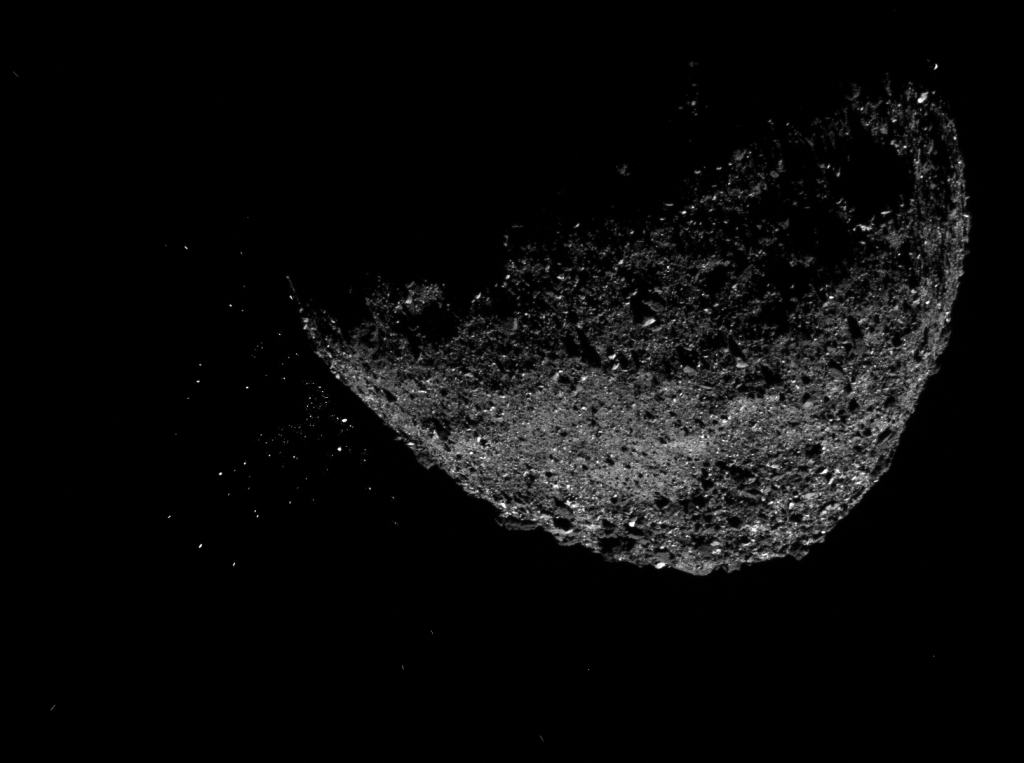
 Geodesiq Strategies