
We live in a time of great calamity and uncertainty, but we should find comfort in the following clarity: The clean future, which is our only viable future, is achievable, and it will bring with it unprecedented prosperity, wellbeing, and dignity. It is achievable, because all of the knowledge, technology, policy options, and practical tools we need are already active today.
If we are to continue enjoying the convenience of modern technology, of investable industries and international trade, of banking open to whole populations, of food systems that deliver enough nutrition to eliminate hunger—a still ongoing project—we will be living in a world where:
- Energy systems no longer produce greenhouse gases.
- Advanced wind energy capture and storage systems power the burst of energy and transport every morning.
- Large scale and modular and nano-scale solar energy systems power most activities everywhere.
- Agriculture restores ecosystems and soil biomass, stabilizing rainfall patterns and protecting watersheds.
- Heavy industry produces mostly materials, while manufacturing is increasingly localized and lightweight.
- Rural economies are diversified, while remaining rural economies, using data, science, and new forms of finance, to drive sustainable development for all.
In this clean future of sustainable, shared thriving, the most investable companies will be those that eliminate pollution and spread wealth and opportunity. The most valuable large companies will be those that support ecosystems of microscale, small, and medium-sized enterprises (MSMEs) that deliver goods and services and support sustained, diversified hiring.
The elephant in every room where economics, investment, finance, and trade are discussed, is that there is no viable economic future that does not align with most or all elements of this vision. Using 18th and 19th century technologies to burn irreplaceable resources and pollute and degrade sensitive ecosystems, while prematurely ending millions of human lives every year, and generating trillions of dollars in forced public spending, will lead to widespread socio-economic and political collapse and to suffering and destabilization on an unprecedented scale.
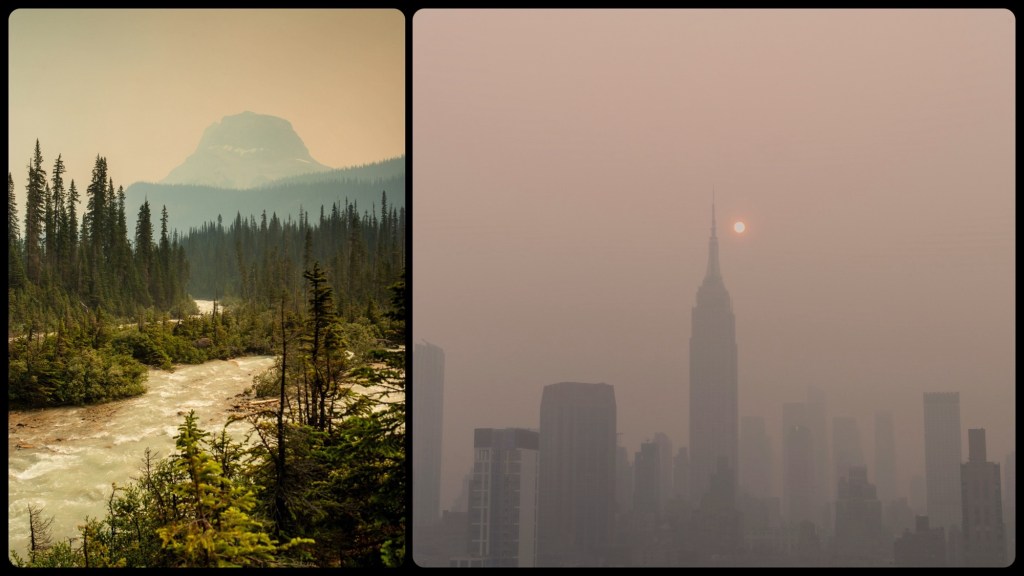
While political allies of polluting industries falsely frame climate science as alarmist, the consensus climate models are intentionally conservative, focusing on knowable impacts. As climate disruption continues to advance in all regions, we are seeing compounding impacts the costs of which are almost incalculable.
How would today’s institutions manage the disruption of everyday life everywhere on Earth in the world projected by the science underlying the 2023 State of the Climate report? The report found that, if substantial progress is not made to slow and stop global heating and climate disruption:
“By the end of this century, an estimated 3 to 6 billion individuals — approximately one-third to one-half of the global population — might find themselves confined beyond the livable region, encountering severe heat, limited food availability, and elevated mortality rates because of the effects of climate change…”
No nation has the capability, let alone any serious plan to deal with such worldwide instability. Today’s institutions, the wealthiest nation states themselves, will not be able to operate in that environment. The future stability of everyday human existence must be founded on sustainable human development in line with climate risk reduction and resilience.
The clean future is the only viable future.
And, it is achievable.

To get there, we need to start working immediately—in local communities, in multilevel cooperative governance efforts, and as a community of nations—to put down the roots of a clean future of resilient prosperity. The elements of that great collective project are as diverse as human circumstances, but we can summarize them as follows, to focus our attention:
- All communities, institutions, industries, and nations, need to understand the balance of hidden costs and co-benefits that determines their risk and reward prospects.
- Co-investment mechanisms that allow for cooperative problem-solving to drive mainstream climate-resilient development need to be put to work.
- All 17 of the Sustainable Development Goals need to be treated as common-sense metrics for human security and opportunity, in all countries and communities.
- Informational freedom and integrity need to be priorities for all institutions, regardless of their political structure or climate liability risk.
- With or without help from government, stakeholders need to organize local meetings to set shared goals, share insights, and develop scalable solutions.

Around the world, national and local economies are under increasing stress, because non-linear compounding costs are accumulating, making everyday life less safe and secure. People are questioning whether it makes sense to put their faith in established institutions, and untested technologies are being given undue influence.
It is too late to secure a livable future through business as usual, with incumbent industries making small tweaks to established systems. That does not mean, however, that there will not be expanded opportunity for everyone, as we mobilize to stop polluting and start restoring and conserving planetary systems, ecological health, and human security.
In some places, whole new kinds of institutions will be needed. Some talk about variations on the imagined Ministry of the Future—a kind of interagency team focused on ensuring critical decisions are made at the right time, in the right way, to create the optimal conditions for sustainable security and prosperity. Both nations and municipalities might want to create macroeconomy stabilization funds that can serve as emergency response mechanisms or incubators to drive progress.
Those that fall behind will see steadily rising risk and cost. Proportional climate risk will fall harder on those less prepared cities, regions, and industries. Those that establish flexible mainstream economies, with diversified opportunity and adaptive design thinking, will be poised to become high-value centers of knowledge and innovation.
A contribution by Earth Civics to discussions at the first global Conference on Transitioning Away from Fossil Fuels, taking place April 24-29, in Santa Marta, Colombia.